
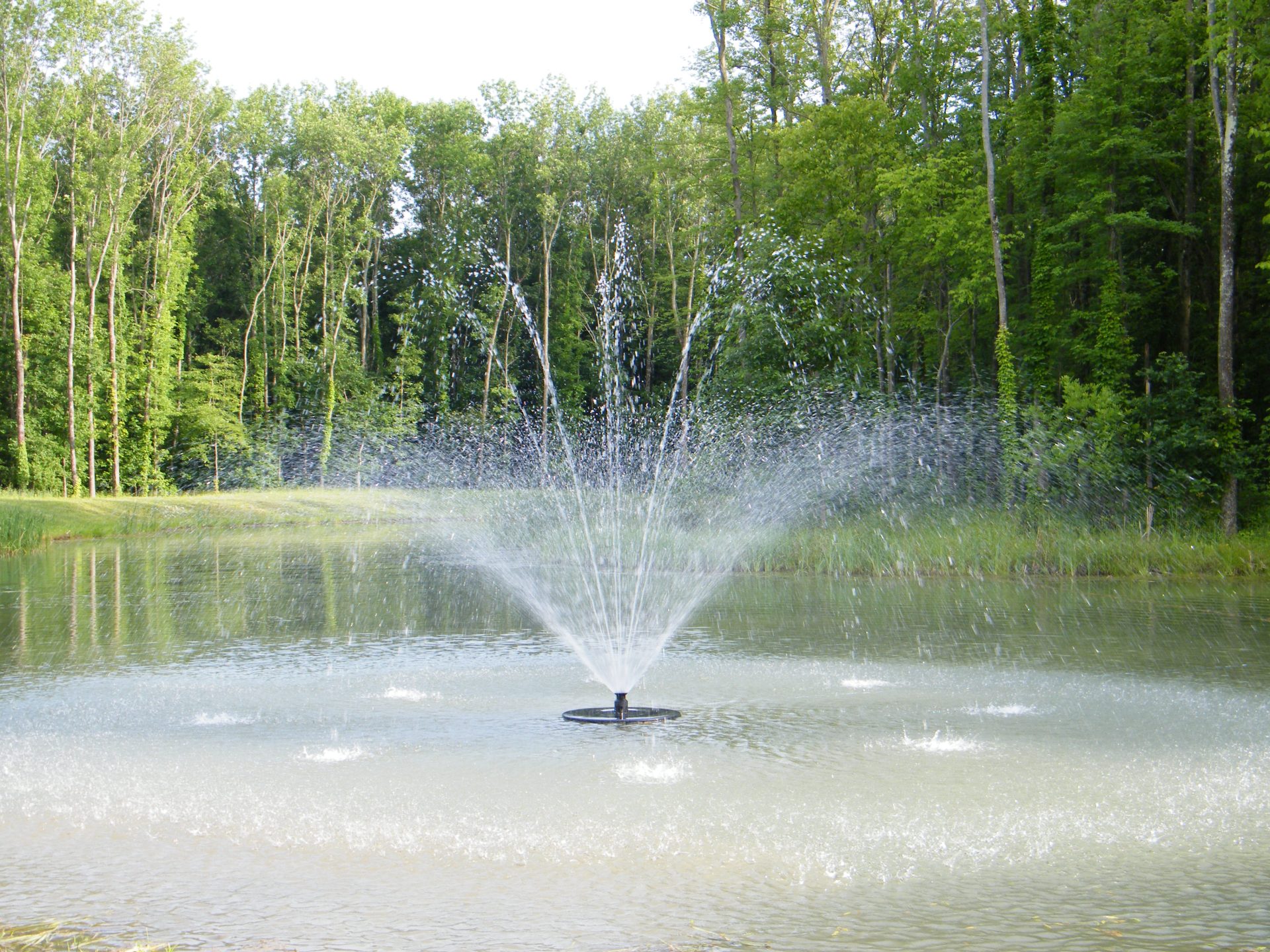
If your pond fountain isn’t operating correctly, don’t panic. Most issues are caused by power interruptions, clogged components, dirty pumps, electrical problems, or wildlife damage. This step-by-step pond fountain troubleshooting guide will help you quickly identify the problem and determine the best solution.
Quick Answer
If your pond fountain is not working, the most common causes are:
- Loss of power at the outlet
- A tripped breaker or GFCI
- A dirty pump clogged with mud, debris, or mineral buildup
- Clogged intake screens or nozzles
- A failed capacitor (if the pump hums but doesn’t spin)
- Wildlife damage to the power cord
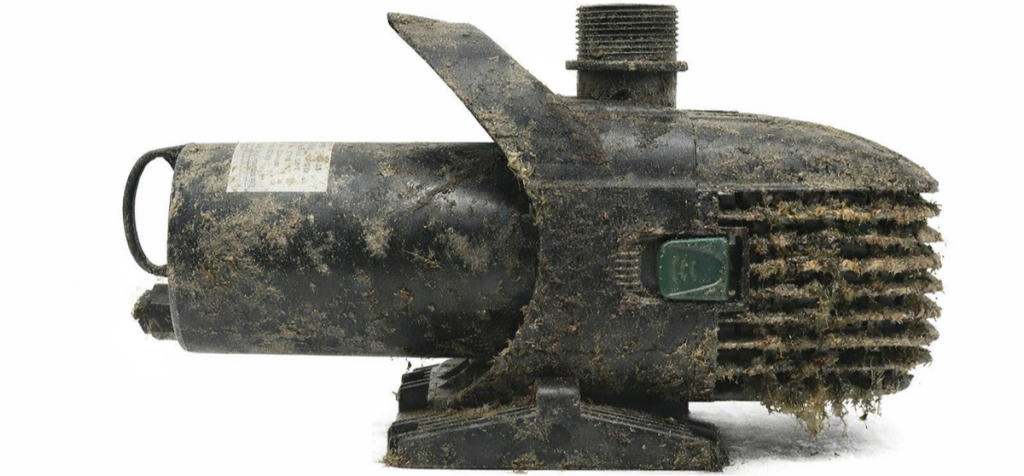
Many fountain problems are simply caused by pumps becoming dirty over time. Mud, algae, debris, and dissolved minerals can build up to the point that they physically stop the impeller or cause the motor to overheat.
In our experience, 9 times out of 10 a thorough cleaning — often including a CLR bath — resolves the issue on RHP pumps.
Start by confirming power at the pond. Then thoroughly clean the intake screen, nozzle, and pump components before assuming the motor has failed.
⚠ Safety Before Troubleshooting

Keep People Out of the Pond
Never allow anyone to be in the pond while the fountain is operating or being tested.
- Disconnect power first
- Confirm power is off
- Keep swimmers and pets out of the water
Do Not Run the Fountain Out of the Water
Most floating pond fountains — including the RHP Series — are designed to operate while fully suspended in water.
Running a fountain dry can cause rotor or impeller damage, overheating, and premature motor failure. Many fountain motors are water-cooled and rely on surrounding water to regulate temperature. Do not energize the unit while it is out of the pond.
Fountain Won’t Turn On
A lot of times when a fountain goes out, the issue isn’t the fountain at all — it’s the power source at the pond.
- Reset the breaker and GFCI outlet.
- Temporarily bypass any timer.
- Test the outlet itself.
Use a multimeter to verify voltage. If you don’t have one, plug in a simple device like a phone charger to confirm power is present.
Always confirm power at the pond before assuming the fountain has failed.
Fountain Is Running But No Water Is Spraying
- Clogged intake screen
- Blocked nozzle
- Debris inside the pump
- Failed capacitor
If the pump is humming but the impeller is not spinning, a failed capacitor is often the cause.
The capacitor helps start the motor. When it fails, the motor may energize and hum, but it won’t produce enough torque to spin the impeller and move water.
We do not stock replacement capacitors, and capacitor replacement is not something we typically recommend. Internal electrical repairs can be involved and carry no guarantees.
Always clean the unit thoroughly before assuming an internal failure.
Pump Is Dirty or Overheated
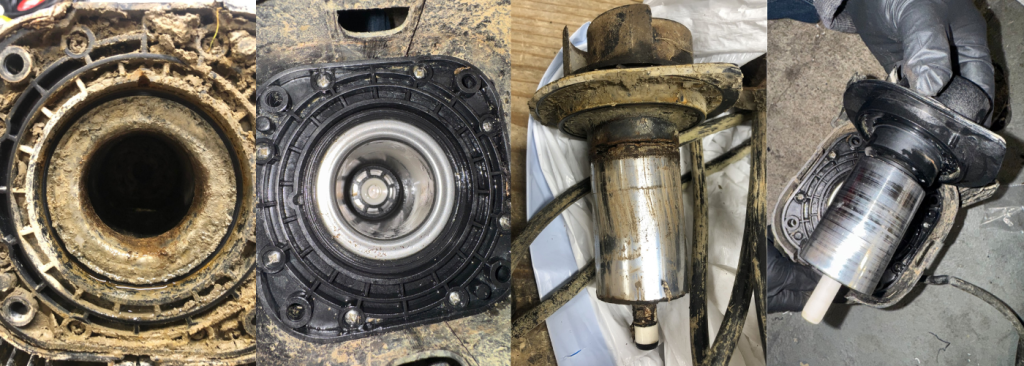
One of the most common issues we see is simply a dirty pump.
- Mud and sediment
- Algae buildup
- Leaves and organic debris
- Dissolved mineral deposits
Heavy buildup can physically stop the impeller, restrict water flow, cause overheating, and trip thermal protection.
In our experience, most RHP performance issues are resolved with a thorough cleaning in an undiluted CLR bath.
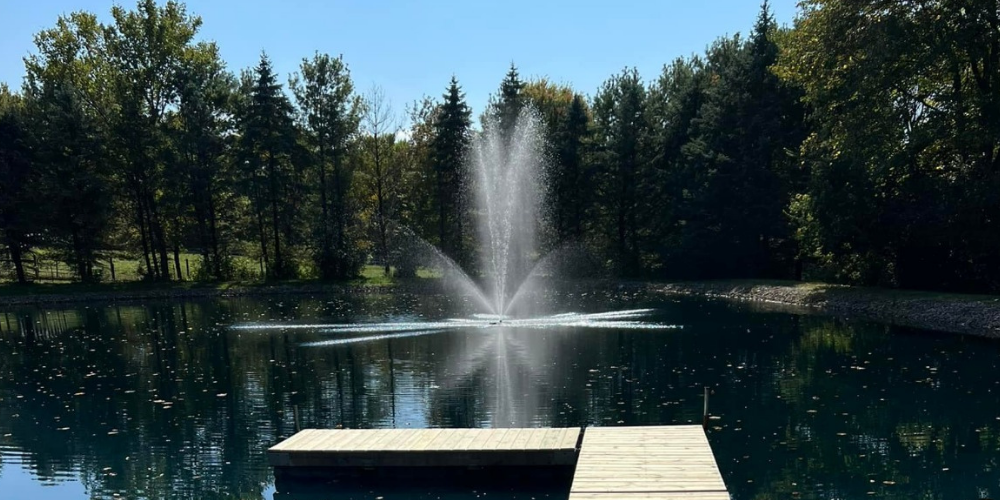
Fountain Spray Is Lower Than Normal
- Mineral buildup
- Clogged nozzles or intake screens
- Worn impeller
Clean the intake screen and nozzle thoroughly. Soaking components in undiluted CLR is often effective for removing mineral deposits.
Mineral buildup and clogged intakes are among the most common causes of reduced spray height.
Fountain Is Making Loud Noise
All fountains produce some vibration — that’s normal. Grinding, rattling, or sudden loud noises are not.
- Shut the unit off immediately.
- Inspect the impeller and rotor cavity for debris and damage.
- Do not restart the fountain if damage is present, as operating it without repairs can cause further and more costly damage.
Muskrat Damage Near the Pump
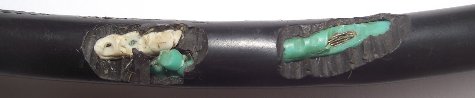
In rural and farm ponds, we’ve noticed muskrats often chew power cords close to the pump housing under the float. Our guess is the vibration from the running motor draws their attention.
If the cord is chewed too close to the pump, repairs can become much more difficult.
In some cases, there simply isn’t enough undamaged wire left to make a proper splice. When that happens, you can’t safely extend the cord — and the only option may be replacing the entire unit.
To reduce the risk, many pond owners protect the first several feet of cord using:
- Flexible conduit
- Stainless steel braided sleeves
- Old garden hoses as a deterrent
Some pond owners choose to run the entire cord through protective covering in ponds with heavy muskrat activity.
If muskrat activity continues, professional wildlife control may be necessary to prevent repeated damage.
Quick Diagnostic Table
| Problem | Likely Cause | First Thing to Check |
|---|---|---|
| Won’t turn on | No power | Reset GFCI and test outlet |
| Low spray | Clogged intake or nozzle | Clean screen and nozzle |
| Humming, no spray | Failed capacitor | Inspect for debris first |
| Loud grinding | Debris in impeller | Shut off immediately – check impeller |
| Trips breaker | Cord damage or ground fault | Inspect wiring near pump |
Frequently Asked Questions
Why is my pond fountain humming but not pumping water?
If your fountain is humming but no water is spraying, the impeller may not be spinning. This is often caused by debris buildup or a failed capacitor. Always clean the intake screen and impeller area first.
How often should I clean my pond fountain?
Most fountains should be inspected and cleaned at least once per season. In ponds with heavy sediment, algae, or hard water, more frequent cleaning may be necessary.
Can I run my pond fountain out of the water?
No. Most fountains are water-cooled and rely on being submerged during operation. Running a fountain dry can damage internal components.
What is the most common reason a pond fountain stops working?
In our experience, the most common cause is a dirty pump. A thorough cleaning — often including a CLR bath — resolves most performance issues.
Still have questions?
Contact our pond fountain specialists →

The Fountain Guys
Pond fountain and aeration specialists since 1999.
Our Knowledge Center shares real-world installation,
maintenance, and troubleshooting advice.