
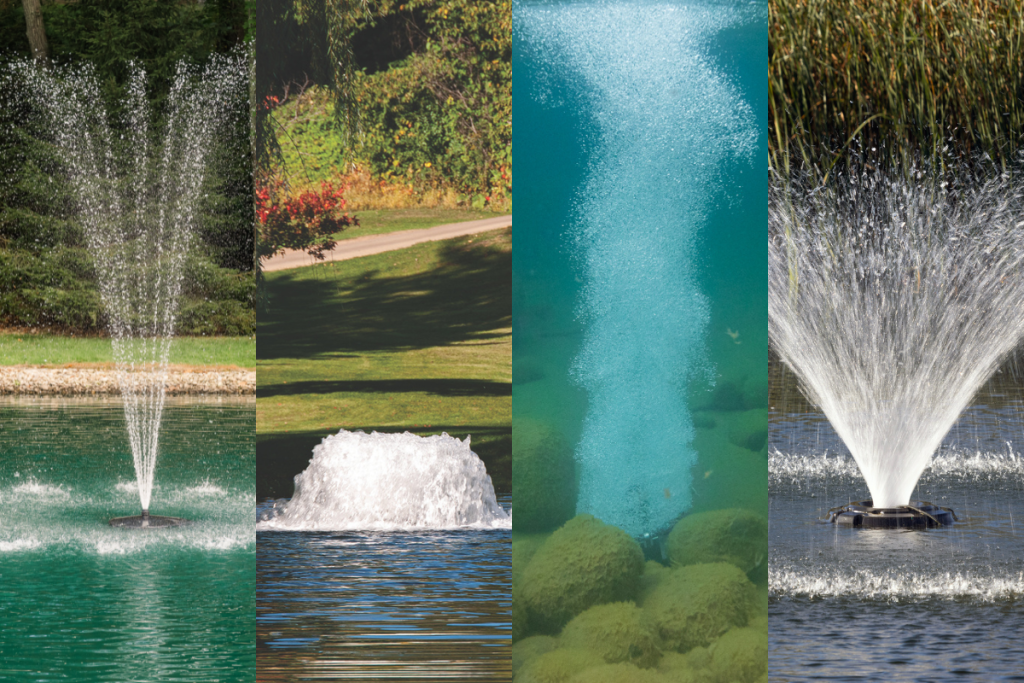
If you're trying to decide between a decorative pond fountain, a surface aerator, a bottom diffused aeration system, or a display aerator, you're not alone.
These systems all move water — but they improve ponds in very different ways.
Choosing the wrong one can mean poor water quality, wasted money, or not getting the visual result you expected.
Let’s break it down clearly.
Quick Answer
- If you want visual appeal and moderate circulation, choose a decorative fountain.
- If you want strong surface agitation and oxygen transfer, choose a surface aerator.
- If you want maximum water quality improvement and full-depth oxygenation, choose bottom diffused aeration.
- If you want a balance of display and aeration, choose a display aerator.
In many ponds, the best solution is combining a fountain with bottom diffused aeration.
Decorative Pond Fountains
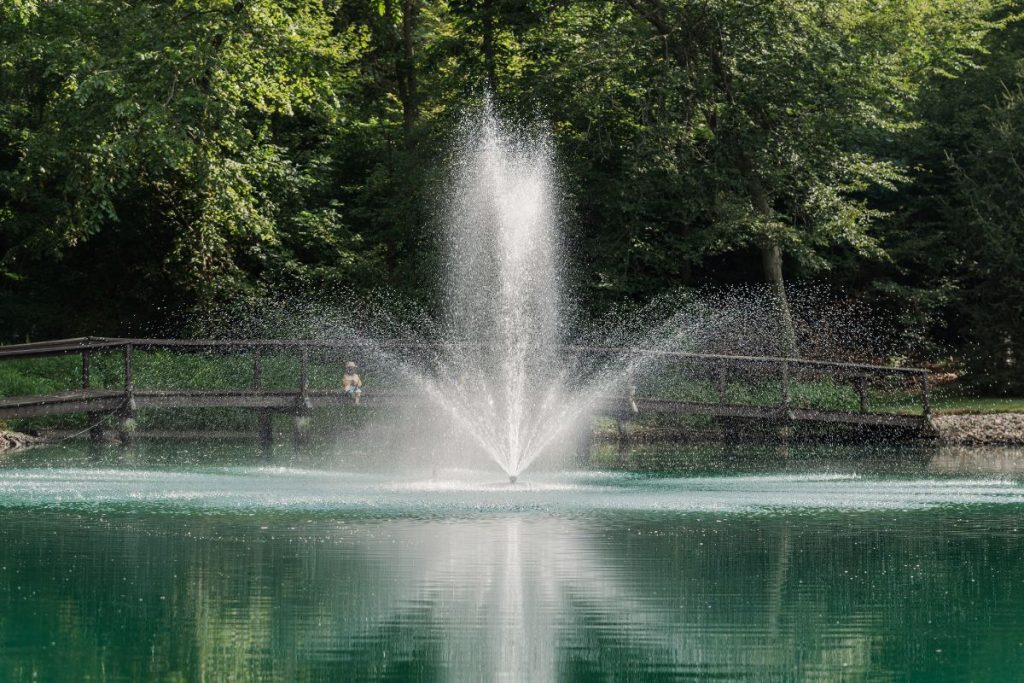
Decorative pond fountains pull water from just below the surface and spray it into the air in various patterns.
As droplets fall back into the pond, they absorb oxygen and create surface circulation.
They are primarily designed for appearance — with added aeration benefits.
If you're unsure what size fountain your pond needs, start with our complete sizing guide.
Fountains Are Good For
- Residential ponds
- HOA and commercial properties
- Ponds under 1 acre
- Owners who want a visual centerpiece
What Fountains Do Best
- Improve aesthetics
- Add movement and sound
- Increase surface oxygen
- Provide moderate circulation
Fountain Limitations
- Do not oxygenate deep water effectively
- Do not break thermal stratification
- Not a full replacement for bottom aeration in deeper ponds
Surface Aerators
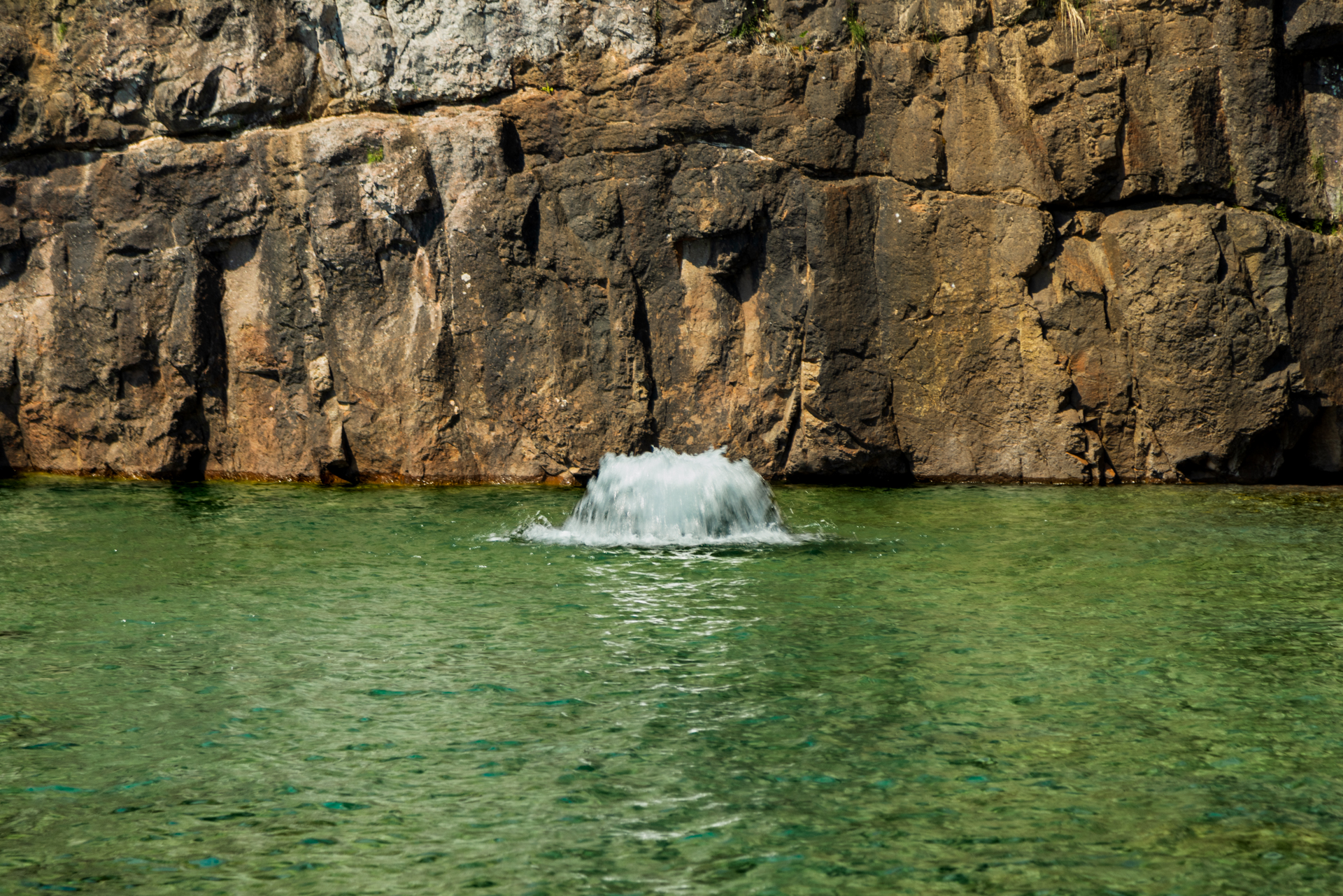
Surface aerators churn water aggressively at the surface instead of creating tall decorative spray patterns.
A good example is the AF Series from Kasco Marine.
They focus more on functional oxygen transfer than visual impact.
Surface Aerators Are Good For
- Fish ponds
- Functional aeration needs
- Situations where appearance is not a priority
What Surface Aerators Do Best
- Move large volumes of water
- Increase dissolved oxygen near the surface
- Provide strong surface agitation
Surface Aerator Limitations
- Limited deep-water oxygenation
- Minimal decorative appeal
- Still primarily surface-based circulation
Bottom Diffused Aeration Systems
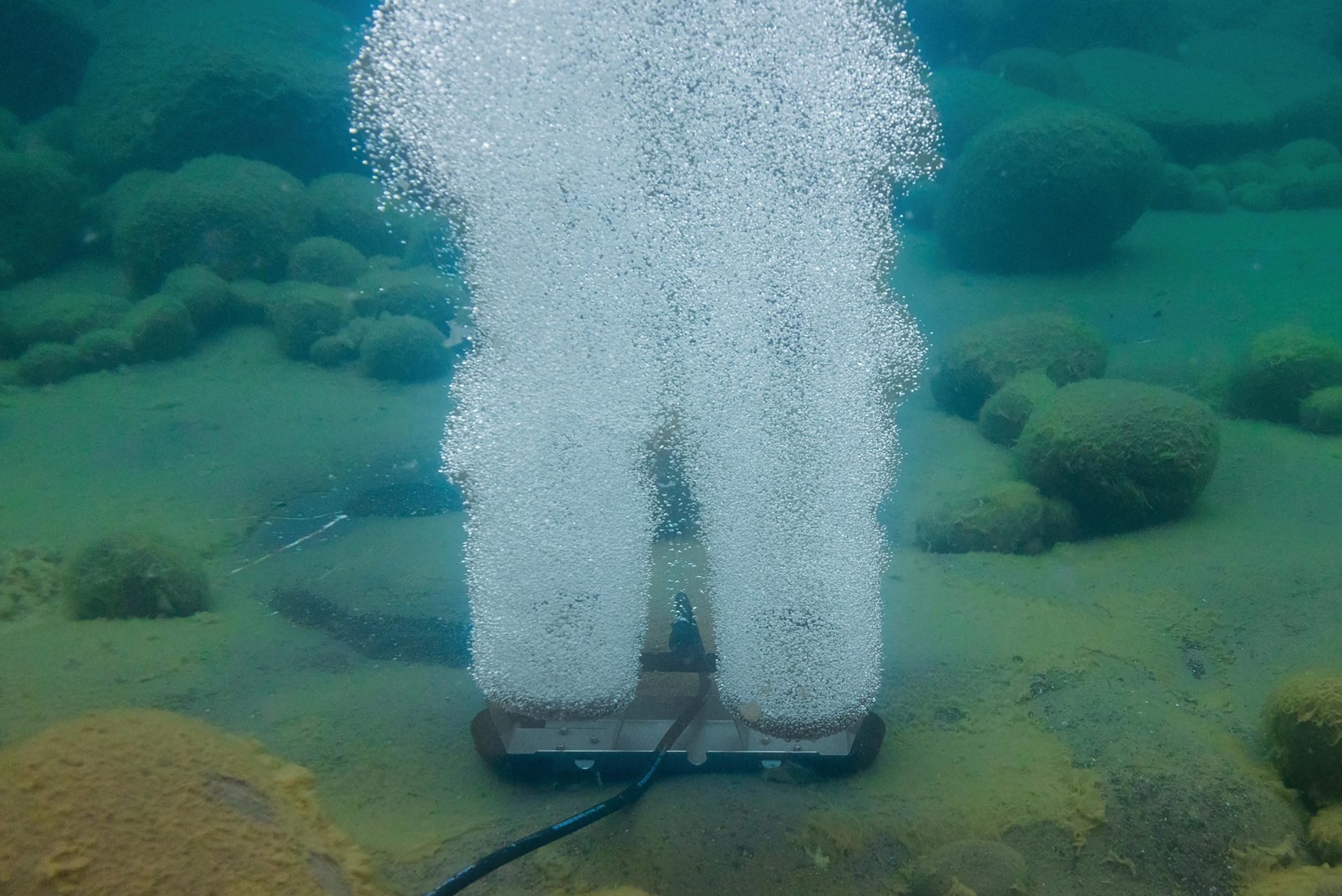
Bottom diffused aeration systems use a shoreline compressor to push air through tubing to diffuser plates placed at the bottom of the pond.
As bubbles rise, they lift deep water upward and circulate the entire water column.
This is the most effective method for improving overall pond health.
Air Diffusers Are Good For
- Ponds deeper than 6–8 feet
- Ponds with recurring algae issues
- Fish ponds that need consistent oxygen
- Ponds with muck buildup
- Ponds over 1/2 acre with depth variation
- Long-term water quality improvement goals
What Air Diffusers Do Best
- Oxygenate deep water
- Break thermal stratification
- Reduce muck buildup
- Support long-term water clarity
- Improve fish health
Air Diffuser Limitations
- No visual display
- Requires shoreline installation
- Compressor requires maintenance
Depth Recommendations
For ponds up to approximately 10 feet deep, The Fountain Guys Diffused Air Systems are ideal.
For ponds deeper than 10 feet, we recommend systems like the Robust-Aire System from Kasco Marine, which are designed to handle greater depth and higher back pressure.
Display Aerators (Hybrid Option)
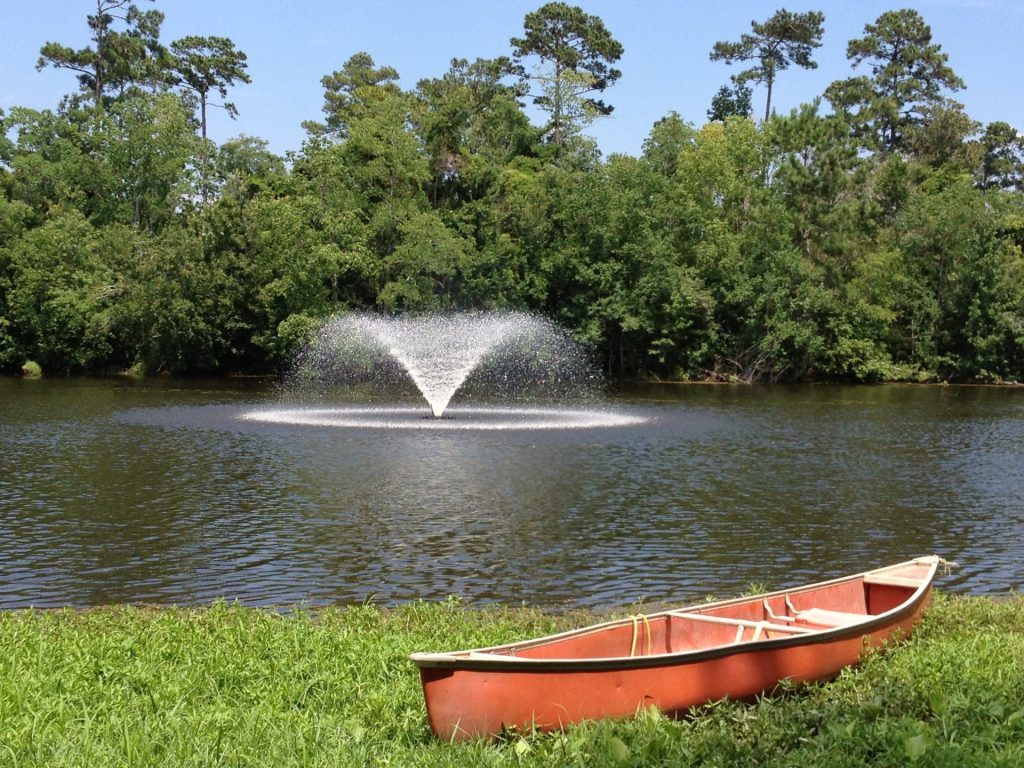
Display aerators sit between decorative fountains and surface aerators.
They produce a lower, wider spray pattern while focusing more on aeration performance than tall decorative fountains.
They offer moderate aesthetics with improved oxygen transfer.
Display Aerators Are Good For
- Pond owners who want both function and some visual appeal
- Wind-prone areas where tall spray drift is a concern
- Fish ponds needing stronger surface oxygenation
- Functional ponds that still need curb appeal
- Situations where a decorative fountain is too tall or ornamental
What Display Aerators Do Best
- Provide strong surface oxygen transfer
- Create wider, lower spray patterns
- Move significant volumes of water
- Offer more aeration performance than tall decorative fountains
- Reduce wind drift compared to high vertical sprays
Display Aerator Limitations
- Do not oxygenate deep water like bottom diffused systems
- Limited decorative height and visual impact
- Do not fully break thermal stratification
- Still primarily surface-based circulation
Side-by-Side Comparison
| Feature | Decorative Fountain | Surface Aerator | Bottom Diffused Air | Display Aerator |
|---|---|---|---|---|
| Visual Appeal | Excellent | Low | None | Moderate |
| Surface Oxygen Transfer | Moderate | Very Good | Good | Good |
| Deep Water Oxygenation | Low | Low | Excellent | Low |
| Stratification Control | None | None | Excellent | None |
| Overall Pond Health Impact | Moderate | Very Good | Excellent | Good |
The Best of Both Worlds: Fountain + Bottom Aeration
If you want strong water quality improvement and a beautiful visual display, combining a decorative fountain with bottom diffused aeration is often the most balanced and professional solution.
The fountain enhances surface movement and aesthetics, while the diffuser system improves the entire water column from bottom to top.
Why Combining Systems Works
- Fountain improves surface circulation and appearance
- Bottom aeration oxygenates deep water
- Together they prevent stratification and improve clarity
- Provides both function and visual impact
Important: Gradually Introduce Bottom Aeration
If your pond has never been aerated before, turning on a bottom diffused system and running it 24/7 immediately can cause serious problems.
Many ponds are stratified, meaning deep water is low in oxygen and may contain harmful gases.
Suddenly mixing the entire water column can stress fish and cause temporary oxygen crashes.
Recommended Startup Schedule
- Day 1: 15–30 minutes
- Day 2: 30–60 minutes
- Day 3: 1–2 hours
- Gradually increase over 7–14 days
This allows oxygen levels and beneficial bacteria to stabilize safely.
Which One Should You Choose?
For most pond owners, a decorative fountain is the best place to start.
Fountains provide the most noticeable improvement to a pond immediately — adding movement, sound, and surface circulation while improving oxygen levels at the top of the water column. For many residential and HOA ponds under 6–8 feet deep, a properly sized fountain provides both strong visual impact and meaningful functional benefit.
If your pond is deeper, has heavy fish populations, or struggles with recurring algae or odor issues, adding bottom diffused aeration can significantly improve overall water quality.
In many cases, the most balanced and professional setup is combining a fountain for surface movement and appearance with bottom aeration for deep-water circulation.
If you're unsure, it's usually best to choose based on pond depth first — and then decide whether aesthetics, maximum aeration performance, or both are your priority.
Not sure which aeration system or fountain is right for your pond? Contact us and we’ll walk you through the best option for your specific setup.
Frequently Asked Questions
Do decorative pond fountains actually aerate water?
Yes, decorative fountains add oxygen primarily at the surface by spraying water into the air. However, they do not effectively oxygenate deep water or break thermal stratification in deeper ponds.
Is a surface aerator better than a decorative fountain?
For pure oxygen transfer and functional aeration, surface aerators generally provide stronger performance than decorative fountains. However, they offer minimal visual appeal compared to fountains.
Is bottom diffused aeration better than a surface aerator?
For overall pond health and deep-water oxygenation, bottom diffused aeration is typically the most effective system. It circulates the entire water column rather than just the surface.
Can I run a fountain and bottom aeration together?
Yes. Many pond owners use both systems together to achieve strong water quality improvement while maintaining an attractive visual display.
What happens if I turn on bottom aeration too quickly?
If your pond has never been aerated before, don’t run a bottom diffuser 24/7 right away. Deep water can be low in oxygen, and mixing it too quickly can stress fish. Start with short run times and gradually increase over 7–14 days to let the pond adjust safely.
Still have questions?
Contact our pond fountain specialists →

The Fountain Guys
Pond fountain and aeration specialists since 1999.
Our Knowledge Center shares real-world installation,
maintenance, and troubleshooting advice.