
Quick Answer
Fountain size is primarily determined by pond surface area. Smaller ponds under 1/4 acre typically use compact units like the RHP 2618 or 3826. Ponds up to 1/2 acre often require mid-sized models such as the RHP 6026 or 6626. Larger ponds over 1/2 acre generally need commercial-grade fountains with 1 HP or more.
Below is a simple sizing guide based on typical pond acreage and recommended RHP models.
Not sure whether a fountain is the right solution for your pond? See our guide on pond fountain vs aerator vs diffused air to understand the differences before sizing.
Step 1: Determine Your Pond’s Surface Area
The most important factor in choosing the right fountain is your pond’s surface area. Fountain sizing is based on how much water needs to be covered and circulated across the pond’s surface.
If you’re unsure how large your pond is, you can use our Pond & Lake Size Calculator to estimate total acreage before selecting a model.
Once you know your approximate pond size, use the recommendations below to choose the appropriate fountain range.
Pond Size Recommendations
Small Ponds (Under ~1/4 Acre)
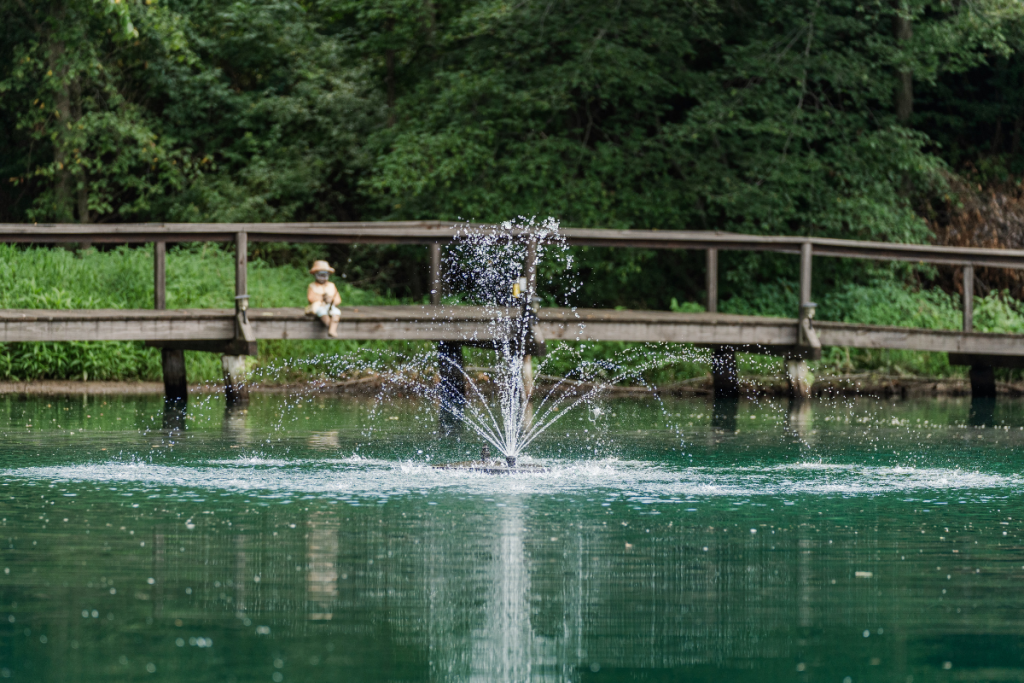
For smaller ponds under approximately 1/4 acre, the RHP 2618 Series Pond Fountain is an excellent fit. This compact unit is ideal for residential decorative ponds, retention basins, and smaller water features where a full 1/4 HP system may be more than necessary.
- Suggested pond size: Under ~1/4 acre
- Spray pattern size: Up to 6′ high × 16′ wide
- Compact, energy-efficient design
- Ideal for decorative and light circulation needs
Up to ~1/4 Acre Ponds
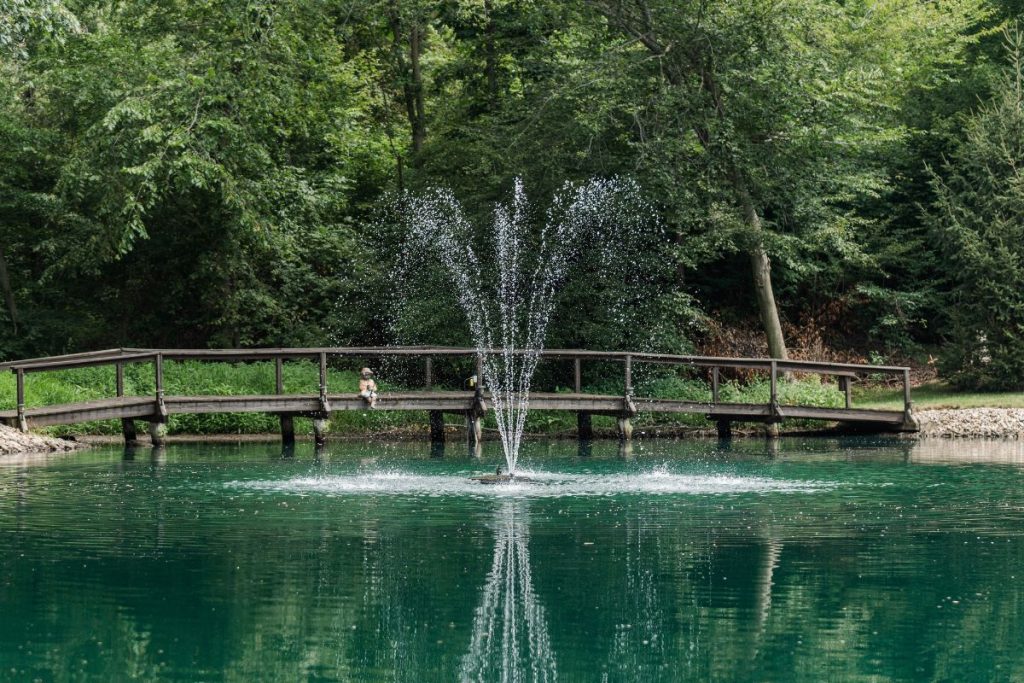
For ponds up to approximately 1/4 acre, the RHP 3826 Series Pond Fountain is typically the ideal choice. It provides a noticeable increase in spray height and surface movement compared to smaller units while remaining efficient and visually balanced for mid-sized ponds.
- Suggested pond size: Up to ~1/4 acre
- Spray pattern size: Up to 9′ high × 24′ wide
- 1/4 HP performance class
- Strong balance of aesthetics and circulation
Up to ~1/3 Acre Ponds
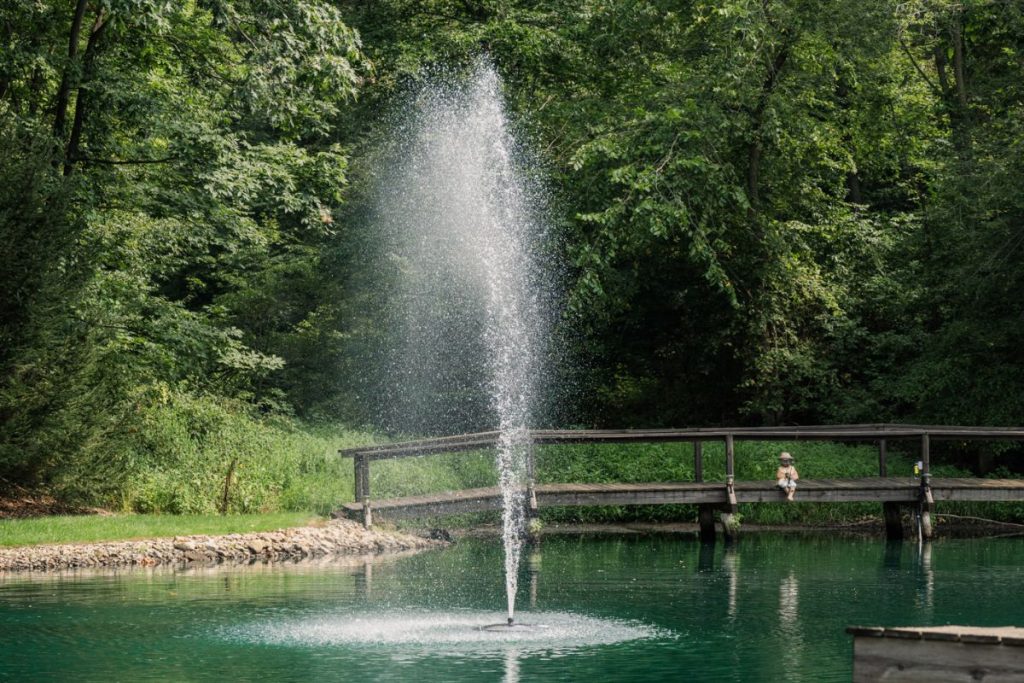
For ponds approaching 1/3 acre, stepping up to the RHP 6026 Series Pond Fountain provides greater display height and improved surface agitation. This model offers stronger circulation and a more dramatic visual presence on the water.
- Suggested pond size: Up to ~1/3 acre
- Spray pattern size: Up to 14′ high × 32′ wide
- 1/2 HP performance class
- Increased coverage and stronger water movement
Up to ~1/2 Acre Ponds
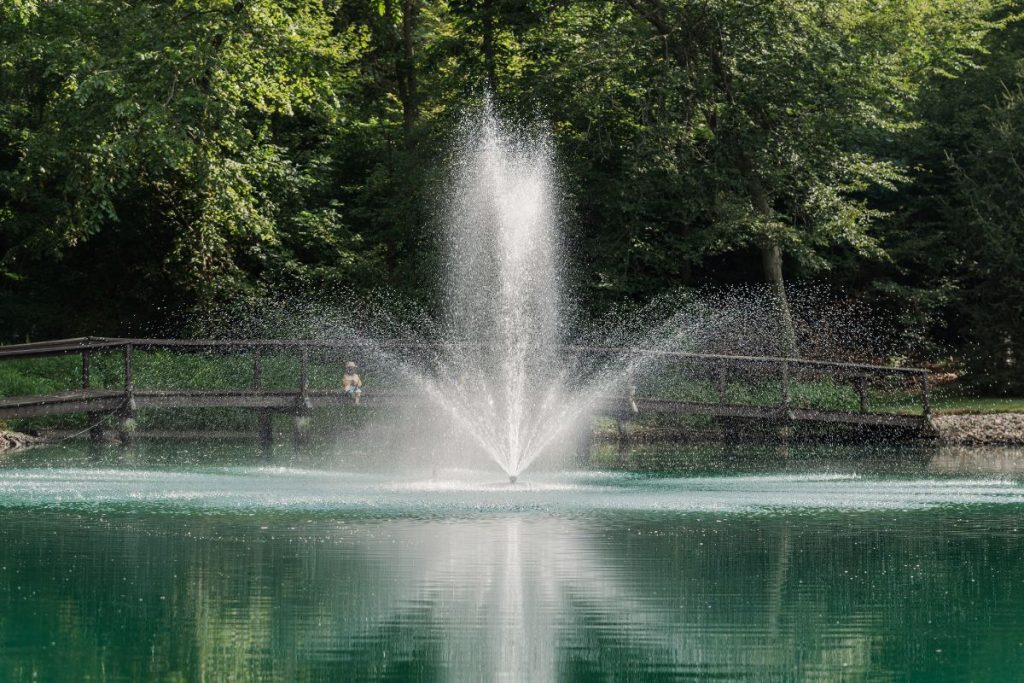
For larger ponds up to approximately 1/2 acre, the RHP 6626 Series Pond Fountain delivers the widest coverage and tallest display within the RHP lineup. This unit provides maximum visual impact while improving overall surface circulation.
- Suggested pond size: Up to ~1/2 acre
- Spray pattern size: Up to 16′ high × 36′ wide
- 3/4 HP performance class
- Largest display coverage in the RHP Series
Ponds 1 Acre and Larger
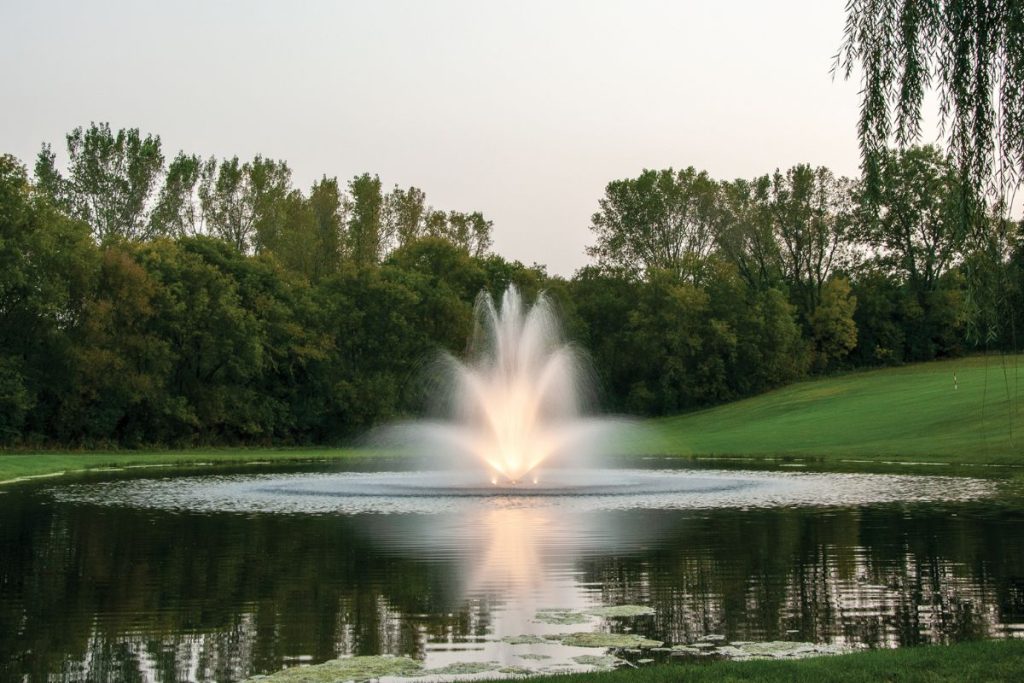
For ponds larger than approximately 1/2 acre, higher horsepower commercial fountain systems are typically required to achieve adequate surface coverage and circulation. These units are built for larger ponds that need stronger water movement and wider spray coverage.
- The Kasco 8400JF (2 HP) is better suited for ponds around 1 acre.
- The Kasco 3.1JF (3 HP) is designed for ponds up to roughly 1 1/2 acres.
- The Kasco 5.1JF (5 HP) is typically recommended for ponds up to about 2 1/2 acres.
These higher-horsepower models provide increased circulation and spray coverage on larger ponds. Placement and pond shape will affect performance, so careful evaluation of pond dimensions and goals is recommended before making a selection.
Should You Use Two Fountains Instead of One Larger Unit?
In some situations, installing two fountains can provide better overall circulation and visual balance than using a single high-horsepower unit. This is especially beneficial for elongated ponds, irregular shorelines, or properties where symmetrical aesthetics are important.
Instead of moving directly to a larger commercial fountain, some pond owners choose to install two mid-sized units placed strategically across the pond. This can improve surface coverage and reduce stagnant zones more effectively than a single fountain positioned in one location.
- Improved circulation across irregular pond shapes
- More balanced visual appearance
- Increased surface coverage
- Added redundancy if one unit requires service
For example, two mid-sized fountains may provide more even coverage across a larger pond than a single high-horsepower fountain located at the center.
Other Factors That Affect Fountain Sizing
While pond surface area is the primary sizing factor, several additional considerations can influence your ideal fountain selection.
Pond Depth
Operating depth is an important consideration when selecting a fountain. Most floating fountains require a minimum depth to prevent the pump from drawing in sediment and debris. Shallow ponds may limit your horsepower options, while deeper ponds may benefit from stronger circulation to prevent stratification.
Desired Spray Height
Spray height impacts both aesthetics and wind drift. Taller displays create more visual impact but may require additional shoreline buffer to prevent overspray. Always match spray height to pond size and surroundings.
Electrical Availability
Electrical service near the pond can affect your options. Many smaller fountains operate on 115V, while larger horsepower models may require 230V service. Confirm your available power source before selecting a higher horsepower unit.
Shoreline Buffer Requirements
Fountains should be placed far enough from the shoreline to prevent splash erosion and maintain clean spray patterns. Narrow ponds may limit maximum spray width.
Primary Goal (Aesthetics vs Aeration)
If your primary goal is visual appeal, a decorative fountain with multiple spray patterns may be ideal. These models are designed primarily for surface aeration and aesthetic impact, creating attractive displays while improving circulation near the water’s surface.
If your goal is improving oxygen levels and overall water quality, a bottom-diffused aeration system is typically the most effective solution for deep-water circulation. In some situations, a high-volume surface aerator—such as the Kasco AF Series—can also provide strong oxygen transfer and circulation, especially in shallower ponds.
Some pond owners prefer a middle-ground solution such as a display aerator. Display aerators produce a clean, attractive V-shaped pattern while moving a higher volume of water compared to traditional decorative fountains. Models like the Kasco VFX Series are designed to improve circulation and oxygen transfer while still providing a visually appealing display.
In certain ponds, combining a fountain with a bottom aeration system provides the best overall results.
Need help choosing the right fountain?
Every pond is different. If you're unsure which fountain size is best for your pond, our team can evaluate your pond’s dimensions, depth, electrical availability, and overall goals to recommend the most effective solution.
Call us at 888-965-9655 or contact us for personalized guidance before making your final decision.
Frequently Asked Questions
How tall should my pond fountain spray be?
Most decorative pond fountains spray between 6 and 16 feet high depending on the model and nozzle selection. Smaller ponds typically use lower spray heights, while larger ponds can support taller displays without overwhelming the water surface or causing excessive overspray onto the shoreline.
Can one fountain fully aerate my pond?
Surface fountains improve circulation and add oxygen near the surface, but they do not fully aerate deeper water. Deeper ponds often benefit from a bottom-diffused aeration system in addition to a fountain.
Is a bigger fountain always better?
No. Oversizing a fountain can create excessive splash, increase operating costs, and overpower smaller ponds visually. Choosing the correct size for your pond’s surface area produces better results long-term.
Can I use two smaller fountains instead of one large fountain?
In some cases, yes. Two mid-sized fountains can provide more balanced circulation and visual coverage than a single large unit, especially in long or irregularly shaped ponds. Proper placement is important for best performance.
How do I know which fountain model is right for my pond?
Start by measuring your pond’s surface area and matching it to the recommended size range. If you’re unsure, our team can help evaluate your pond’s dimensions, depth, and goals to recommend the most effective solution.
Still have questions?
Contact our pond fountain specialists →

The Fountain Guys
Pond fountain and aeration specialists since 1999.
Our Knowledge Center shares real-world installation,
maintenance, and troubleshooting advice.